Introduction
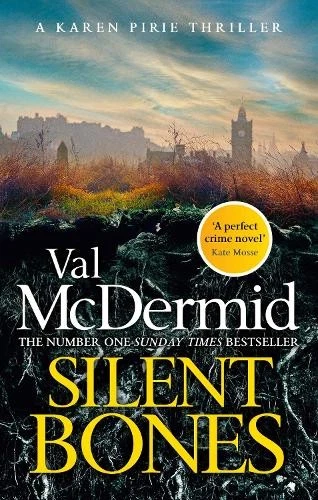
Silent Bones is a crime novel written by Val McDermid, the Queen of Crime and one of my favourite authors. It is Book 7 in the Karen Pirie series.
What the Book is About
DCI Karen Pirie and Scotland’s Historic Cases Unit investigate two seemingly unrelated cold cases. When a motorway landslide uncovers the 11-year-old remains of a missing investigative journalist who was once the prime suspect in his fiancée’s murder, Karen must untangle what he was digging into before he died. At the same time, her team reopens the case of a hotel manager whose death was originally deemed an accident. It obviously turns out that the two deaths are related.
What Worked for Me
Val McDermid isn’t the Queen of Crime for no reason; her ability to spin a yarn is immense. Maybe not quite from the first page (I’m not a fan of prologues), but certainly from the first chapter, I wanted to read the next page and the next. It’s a garden-variety crime novel with garden-variety crime novel tropes but, for me, therein lies the beauty: I know what to expect (murder), I know the format (police procedural), I know the protagonists (detectives, suspects, witnesses etc.), and I know the twists (red herrings, dead ends that sort of aren’t dead ends because otherwise they would just have wasted our time reading them), and I know the ending (the bad guys are brought to justice). Except that one of these tropes isn’t 100% fulfilled in this novel, but I won’t tell you about it because it would be a spoiler. It’s an easy, enjoyable holiday read.
What Didn’t Work for Me
Author Intrusion
I never noticed it before, but I think McDermid’s characters reflect her own personal views rather strongly. The good guys all have socialist-leaning political views, support Scottish independence, and are working-class heroes. The bad guys underpin ‘The Establishment’, exploit ‘The Little Guy’, bow to their English masters in Westminster, and are corrupt up to their eyeballs. The people with money are elitist, racist, and misogynistic, and the rest of us are at their whim and mercy while propping them up with our hard work and loyalty.
I strongly suspect these are McDermid’s own views, and she is not allowing any of her characters to hold different ideas. I don’t think she means to do it, but I think the cumulative effect of all her ‘good’ characters’ samey worldviews is that they function as her ideological mouthpieces. I feel strongly that when sympathetic characters are allowed to believe incompatible, sometimes objectionable things, it makes them so much more interesting. I’m not saying they should all be arseholes, but too much perfection can be too much of a good thing. The good guys are all good in the same ways, and the bad guys are all bad in the same ways, and once I began seeing it, I couldn’t stop seeing it, and then it started grating.
Dialogue
I’ve never before had issues with McDermid’s dialogue, but I had huge issues with the dialogue in this novel. I always joke that the MA I recently completed in Creative Writing ruined my enjoyment of reading because I now nitpick everything I read, but I fear it might be true. It’s certainly true for this novel’s dialogue.
Too many characters use the same sorts of clichés and silly sound bites in their speech and this has the result of making them all sound the same.
Cath Gray (politician): says ‘yummy mummies and rugger buggers’ and the aforementioned ‘Trumpty Dumpy’.
Tavish Adam (architect): says ‘Izzy wizzy, let’s get busy’.
Dan Smart (tech bro): says ‘penis extension Jag’.
Jason: says (policeman) ‘What, you’ve got a black belt in sushi?’
How many people do you come across in any given week who all talk like this? All it does is make it look like McDermid is trying to hard to make her characters sound interesting.
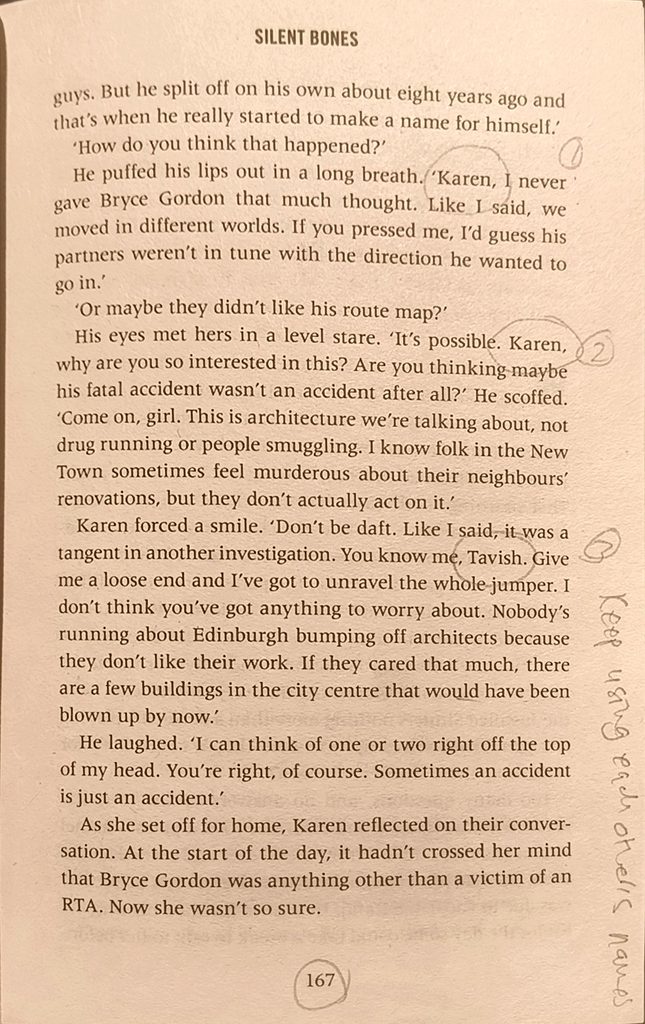
And when you are having a conversation with someone, how often do you use each others names?
‘Deon, would you like some coffee?’
‘Thanks, Reinette, that would be lovely.’
‘Do you want a couple of biscuits with it, Deon?’
I do understand that we need to remind the reader who is talking, especially during longer conversations, but that’s why we have speech marks.
‘Deon, would you like some coffee?’ Reinette asked.
‘Thanks, that would be lovely.’
‘Do you want a couple of biscuits with it?’
One speech mark and one name, and we all know who is talking. I feel like a fantastic author like Val McDermid should know this sort of basic writing ‘rule’ by now, and even if she forgets it, I would expect her editor to pick it up.
The final bit of dialogue that grated was the way people behaved when talking to the police. These days there are enough true crime documentaries with actual police interview footage available on Netflix and YouTube that any writer can easily get a good sense of how police interviews are conducted. My experience from watching (too many!) of these documentaries is that suspects or witnesses are mostly somewhat timid during the interview. Even the guilty ones who are flat-out lying are deferential and answer the questions put to them. They don’t sit there and belittle the cops and engage them in witty banter. And the cops don’t sit there and banter back. Sitting in a small window-less room with a police officer asking questions and knowing you’re being video recorded must be extremely intimidating, but McDermid’s suspects sit there and give their interviewers grief, and Detective Chief Inspector Karen Pirie snarks back. I’m sorry Val, but that’s not realistic, especially when it happens more than once and with different suspects.
The Characters
I’m on Book 14 of Ellie Griffith’s Ruth Galloway crime series. Ruth is a forensic anthropologist at a fictional Norfolk university who helps the police whenever skeletal remains are found. As you can imagine, lots of skeletal remains are found in the area of that police station. I lost interest in the actual murders by about Book 6 because, like the Bones TV series, how many creative ways are there really in which one can make stories about bones interesting? However… Ruth has been having an on-again-off-again affair, and a daughter, with DCI Harry Nelson. This tension between the two main characters, and the ripples and fall-out it causes in their families and with their colleagues, is so well written that I’m suffering the murder investigations just so I can follow the love story. I want to know how it ends! But apart from this love interest, Ruth and Harry are interesting characters who do interesting things that are often unrelated to the murders and I enjoy spending time with them.
Disclaimer: I remind my readers that I absolutely do not read romance, despite possible suggestions to the contrary.
In this series, DCI Karen Pirie’s love life consists of a long-distance relationship with a Syrian refugee who lives in Canada. The burning question in this novel is how long it will take him to get Canadian citizenship so he can get a passport and return to Scotland. I didn’t care about the late-night Zoom calls or the Canadian passport and I’m not sure I even like Karen all that much. I don’t think we’d be friends in real life.
And like I said earlier, her characters are too one-dimensional for my liking. The bad guys have no redeeming features and the good guys are all a bit smug in their goodness, and their flaws are along the lines of being too dedicated to their work (yawn). I can’t think of any other book I’ve ever read where I didn’t care for any of the characters.
Would I recommend this book?
I can’t believe I’m saying this, but yes, I would! If my MA has taught me anything, it’s taught me that a good story trumps almost everything else, and Val McDermid knows how to write a damn fine story.
Final Thoughts
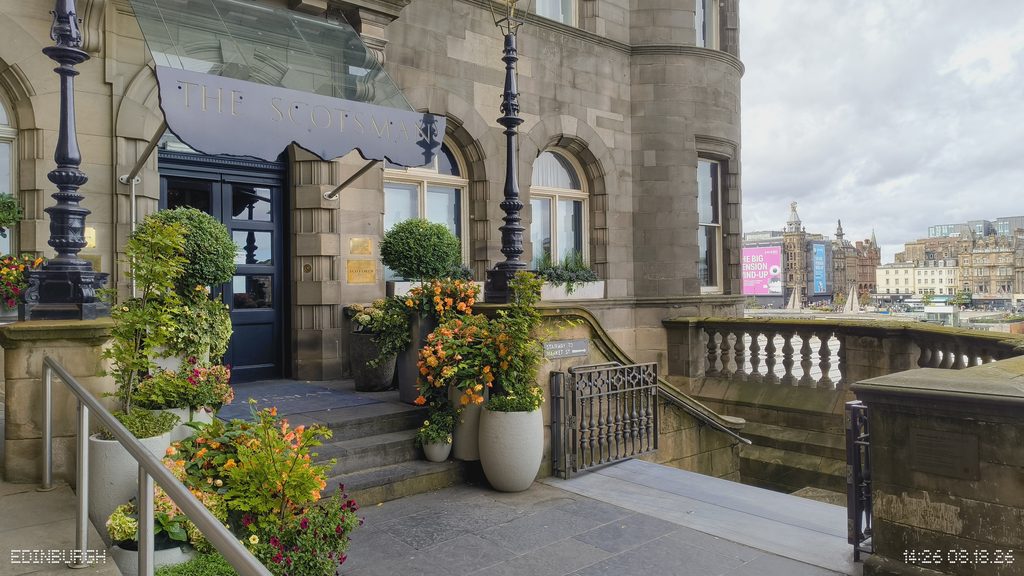
We were in Edinburgh this summer and I had the happy privilege of visiting The Scotsman Steps, one of the places that feature in the story.
Those who have been to Edinburgh will know it’s a city of two halves: a valley right down the middle of the city divides the Old Town and the castle on the castle rock from the New Town that runs along Princes Street on the other side. Sunk into the valley between them are Princes Street Gardens and Waverley Train Station.
One of the bridges that connects these two halves is North Bridge. On the castle side of the bridge, and that looks almost as an extension of the bridge, is a beautiful old building that used to house The Scotsman newspaper. Sadly, it is now a hotel – called The Scotsman Hotel. Immediately outside the entrance to the hotel are The Scotsman Steps. The entrance is so well hidden that if you don’t know it’s there, you’ll miss it. The staircase leads from streetlevel down into the valley and to the entrance of Waverley Train Station.
A few years ago an artist who was commissioned to spruce it up replaced each tread with a slab of marble from different quarries all over the world. It is an incredibly beautiful piece of artwork in a neglected, beerbottle and takeaway container strewn sort of way. In a city that is breathtaking and beautiful, this somewhat smelly rather mouldy staircase is now one of my favourite places. Had it not been for this novel, I would not never have known it existed.
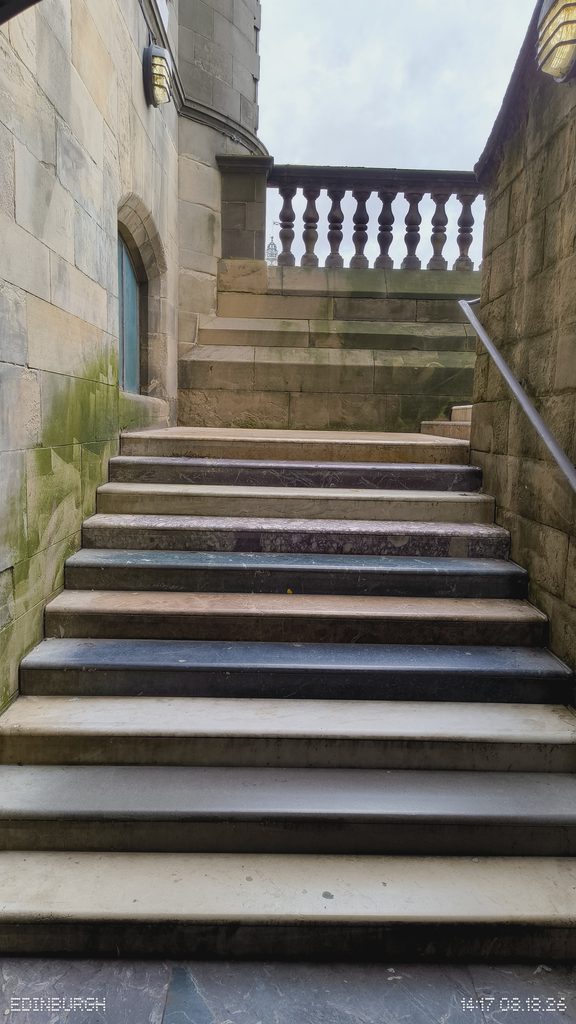
The Scotsman Hotel at the top entrance to the steps also features in the novel, but with a different name. I’m always sorry when beautiful old buildings like newspaper head offices become hotels, but what can you do; times change. To demonstrate my displeasure at this development, I went and peed in it.
Thank you, Val, for introducing The Scotsman Steps to me.